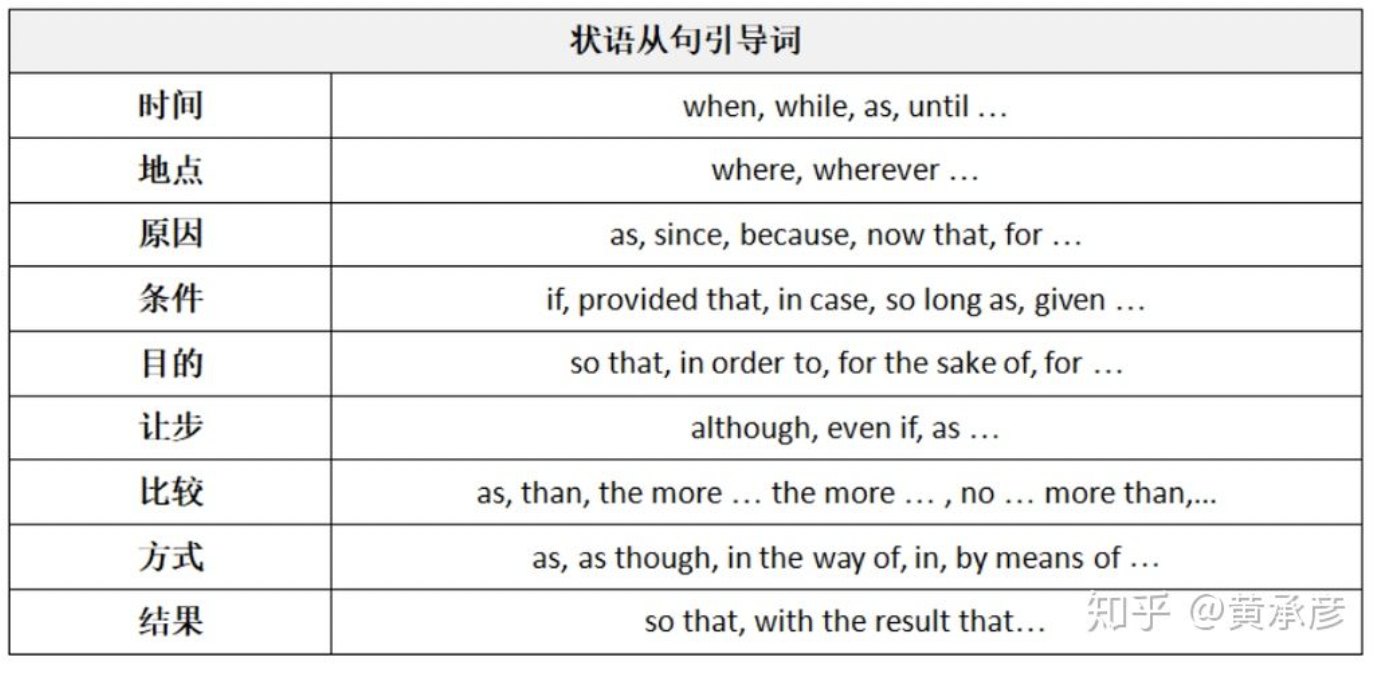
Omitting the subject and verb in adverbial clauses follows these principles:
When the subject of the clause is the same as the subject of the main clause, the subject of the clause can be omitted and its predicate verb takes the V-ing form. For example:
Although working very hard, he failed in the final exam. (Although he worked very hard)
After taking the medicine, she felt much better. (After she took the medicine)
If going there by air, we’ll have to pay twice the fare. (If we go there by air)
When the subject of the clause is the same as the subject of the main clause, and the predicate verb of the clause is the linking verb be (or contains some form of be), the subject and be can usually be omitted together.
- Whenever (she is) free, she often goes shopping. Whenever she has free time, she goes shopping.
- Work hard when (you are) young, or you’ll regret. If you don't work hard while young, you will regret it in old age.
- While (he was) a young boy, he was always ready to help others. Even as a child, he was eager to help others.
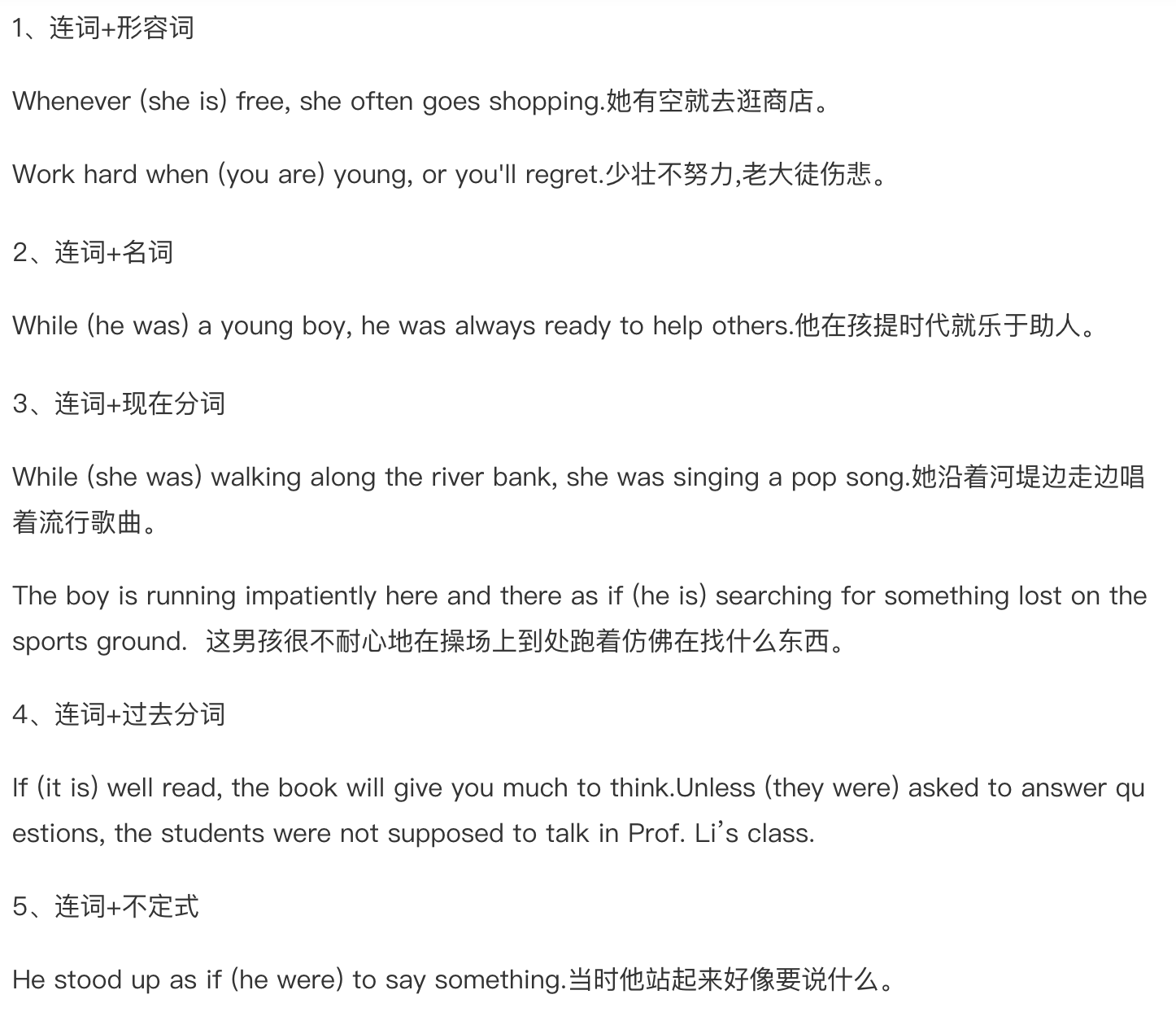

If the subject of the clause differs from the subject of the main clause but is the same as its object, the subject and be in the clause can also often be omitted. For example:
- Father advised me not to say anything until (I was) asked.
When the subject of the clause is it, and the predicate verb is be or contains some form of be, it and be can often be omitted together. For example:
If (it is) possible, he will help you out of the difficulty. If possible, he will help you get out of the difficulty.
You must attend the meeting unless (it is) inconvenient to you. Unless it is inconvenient for you, you must attend this meeting.