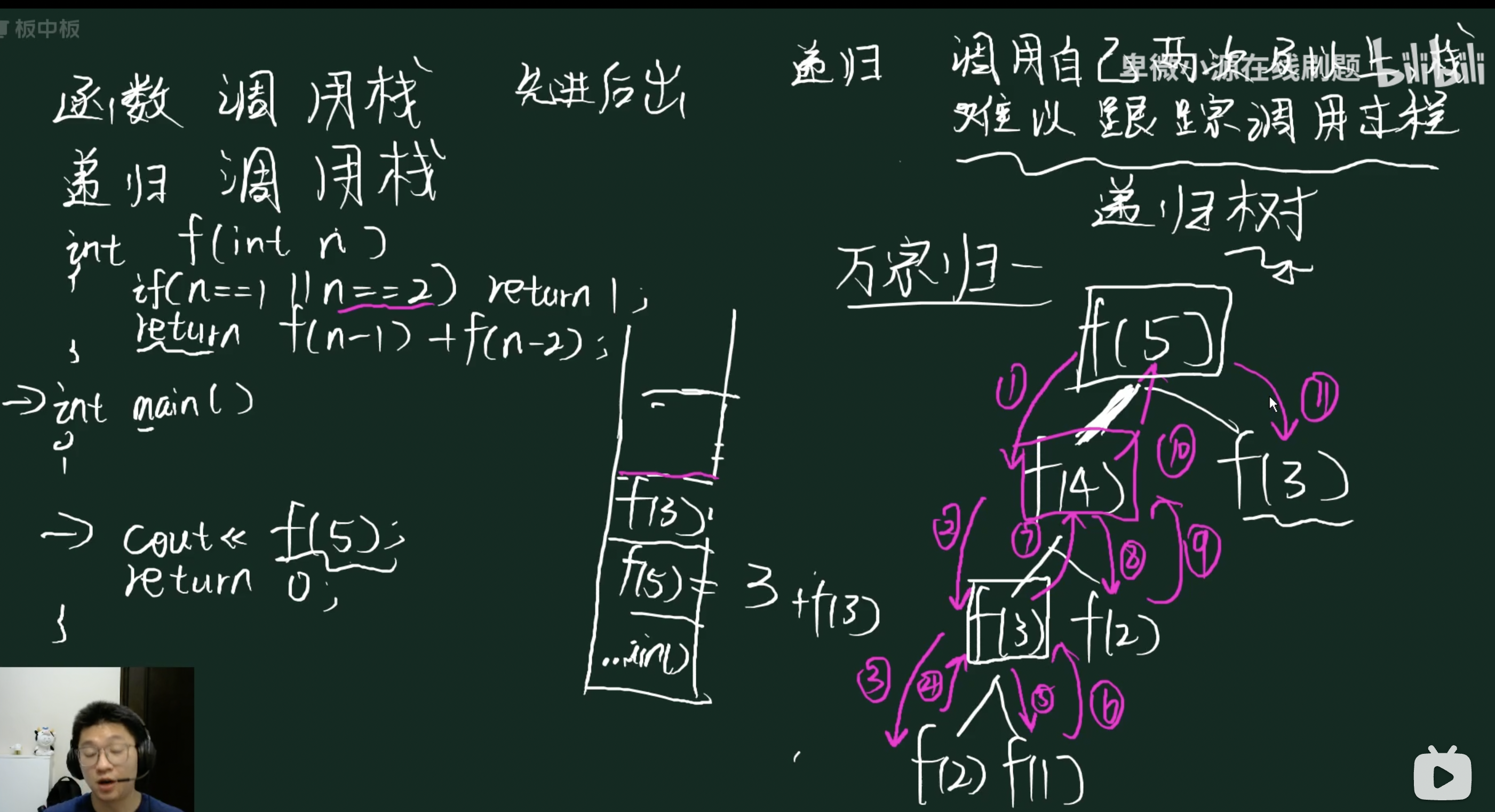
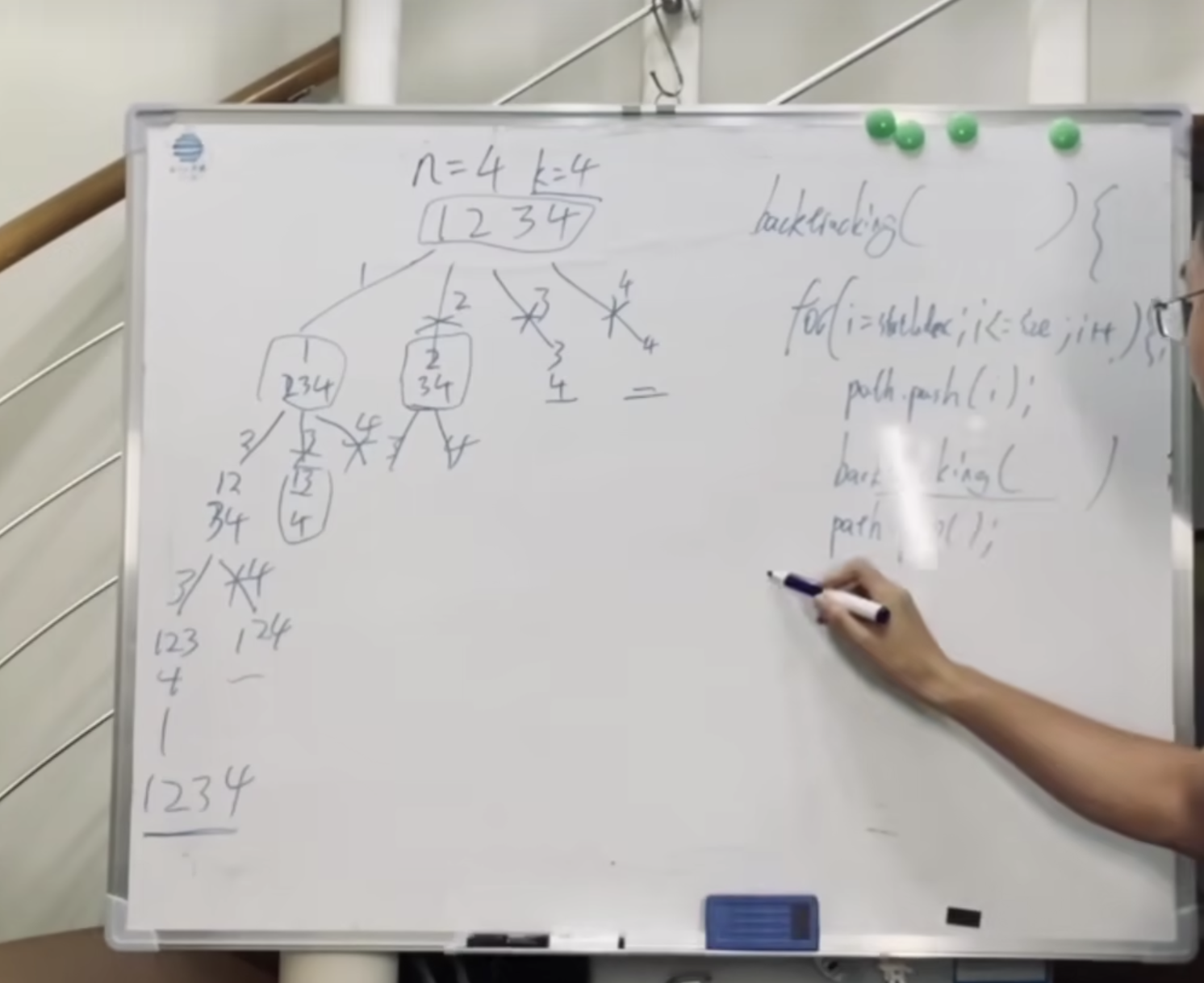
With multiple levels of recursion, the human brain cannot simulate the recursive process, so you need a recursion tree
#include <iostream>
#include <vector>
using namespace std;
void recursion(vector<int>& nums,vector<int>& temp,int target, int sum,int count,int& len,int current){
    //The three steps of recursion
    //- Determine the parameters and return value
    //- Determine the termination condition
    //- Write the logic for a single level of recursion

    if(sum>=target){
        //This is only reached during recursion
        len = min(len, count);
        return;
    }
    for(int i=current;i<nums.size();i++){
        //Originally 4: first backtrack to 4, and the for loop ends
        //Start the second backtrack, i=3 (at this point sum, count and temp have all removed the i=3 and i=4 cases); after the for, i=4
        // Then sum adds the i=4 case, skipping i=3
        //Then backtrack to i=2; after the for, i=3 (here two levels of recursion stack up again (i=3 and i=4),
        //and for i=3 the value of i=2 is gone because it was backtracked; i=4 is a child node of i=3)
        //Use the recursion tree to analyse the whole recursive process
        count++;
        sum += nums[i];
        temp.push_back(nums[i]);
        recursion(nums, temp,target,sum,count,len,i+1);
        //Backtracking starts here: sum, count and temp are all rolled back, but note that i is not
        sum -= nums[i];
        temp.pop_back();
        count--;
    }
}
int minSubArrayLen(int s, vector<int>& nums) {
    int len=999;
    vector<int> temp;
    recursion(nums,temp,s,0,0,len,0);
    if (len==999)
        return 0;
    return len;
}
int main(int argc, const char * argv[]) {
    // insert code here...
    vector<int> nums={1,2,3,4,5};
    int len = minSubArrayLen(15,nums);
    cout << len<<endl;
    return 0;
}
All of the following can be solved with recursive backtracking
Combination problems
Subset problems
Partitioning problems
Permutation problems
Chessboard problems
When you meet these problems, remember to draw the recursion tree first