What’s different between who and whom
Put simply, use whom—which is a pronoun—when it is the object of a sentence. If you can replace the word with “her,” “him,” or “them” for example, use “whom.” You’ll know when to use “whom” if the pronoun is used in the objective case, or action is being done to the pronoun. Take the sentence:
Whom do you believe?
The sentence may sound pretentious, even snobbish. But it is correct because “whom” is the subject of the infinitive “to,” as well as the object of the sentence as a whole.
Many people thus propose that governments need to tackle this issue by controlling the media, whom they see as responsible for inciting this violence through films and television
(Here whom is the object.)
My father is a doctor whom people trusted.
Who/Whom are you going to invite to your party?
(Here you is the subject.)
i.e. which person are you inviting to your party?
Who/Whom can we turn to in case of an emergence?
i.e. if something happens, whom can we ask for help?
We have no idea who/whom the president will choose to be the new manager.
Whether introducing a restrictive or a non-restrictive relative clause, when the antecedent refers to a person, you can use either who (informal) or whom (more formal), as long as it is not the object directly following a preposition:
This aspect is discussed further by Crane, who / whom I mentioned earlier. (Crane, whom I mentioned before, discusses this aspect further.)
In that year he met Rachel, who / whom he was later to marry. (That year he met Rachel, and later married her.)
Note: when it is the object directly following a preposition, only whom can be used:
- I met a man with whom I used to work. (I ran into someone I used to work with.)
Incidentally, the same applies when introducing wh-questions. For example:
Whom / Who are you writing to? (Who are you writing a letter to?)
Whom / Who do you like best? (Who do you like most?)
If it is the object immediately following a preposition, only whom can be used, but such expressions are usually found only in more formal styles. For example:
With whom did you go? (Who did you go with?)
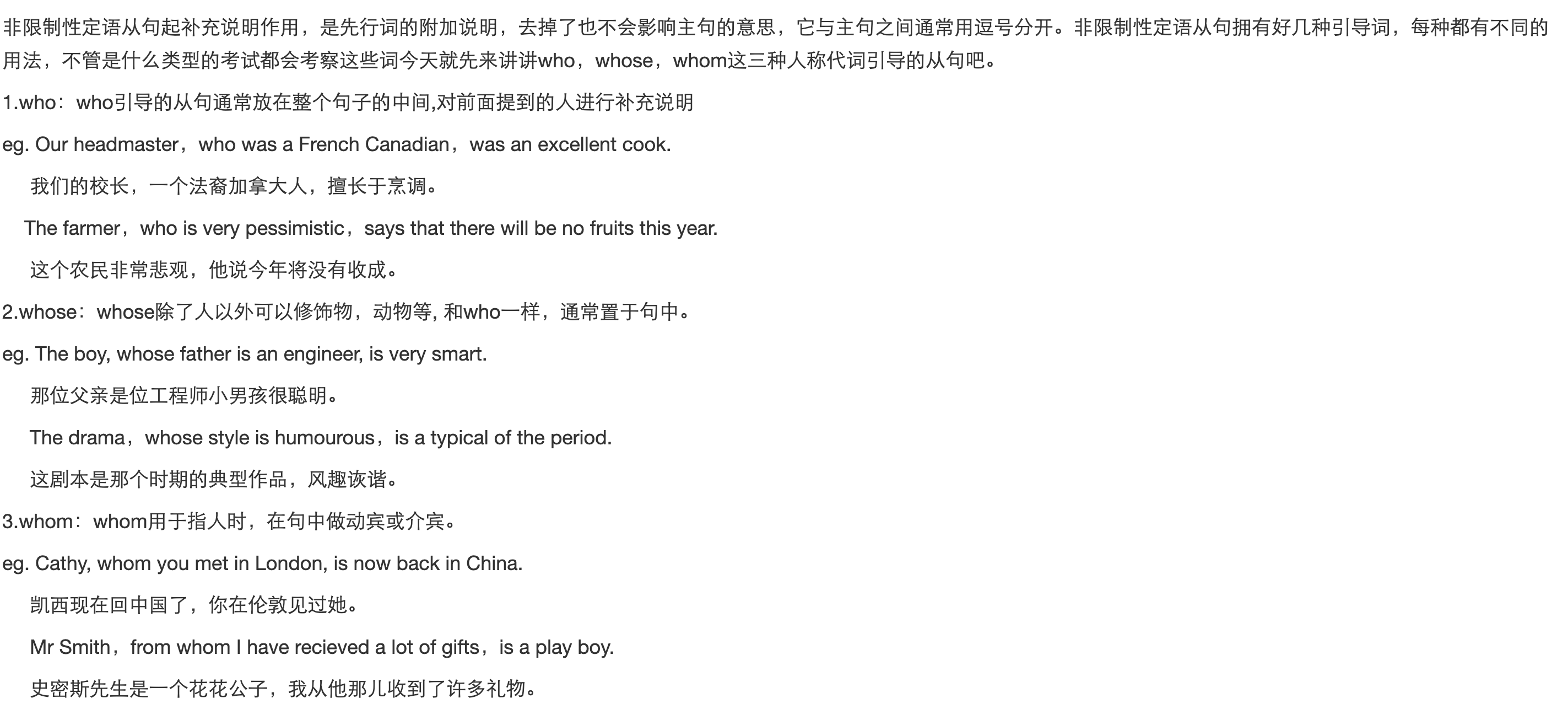
whom is used as the object
1.Who is at the door?
2.Whom did you see at the door?
Do you know why the first sentence uses who while the second uses whom? The answer is that who is always used as the subject of a sentence or clause, whereas whom is always used as the object.
In the first sentence above, who is the subject. In the second, you is the subject and whom is the direct object.
1.whom did you recommend for the job?
2.Are there any people whom you would recommend?
Note that in both sentences above, you is the subject, and whom is the object of the verb “recommend”.